
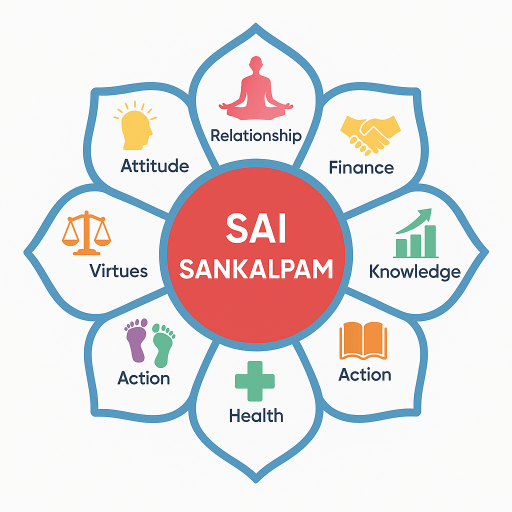
Sai-centric Parenting: Building a Child’s Four Pillars Through the T.E.A.R. Formula
As parents, one of our greatest aspirations is to raise children who thrive in all aspects of life. In today’s fast-paced world, Sai-centric parenting offers a tried and proven approach to nurturing our children’s Four Pillars: Health, Relationships, Finance Values, and Knowledge. Drawing inspiration from the teachings of Sathya Sai Baba, and drawing upon personal experiences as both a doctor and a parent, I will delve into how these pillars can be reinforced through the T.E.A.R. Formula: Teaching, Example, Appreciation, and Reflection.
Health: The Foundation of Well-being
Health is the first pillar and the most fundamental aspect of our children’s development. As a doctor, I’ve seen how early habits can significantly impact long-term well-being. Encouraging physical activity by leading through Example and participating in family sports and outdoor activities helps children appreciate the joy of movement.
Moreover, Teaching the importance of balanced nutrition and mindfulness can create a profound appreciation for health. I remember incorporating gratitude journaling with my kids where we penned down what our bodies allowed us to accomplish each day— a subtle way to nurture respect and awareness for their health.
Relationships: The Art of Connection
The second pillar centers around fostering positive relationships. Discipline with love stands as a cornerstone in Sai-centric parenting. My experience as a parent has revealed that disciplining with empathy and understanding can teach children valuable lessons about accountability without harboring resentment.
I recall a time when my son acted out in school. Instead of immediate punishment, I sat down with him to understand the underlying causes. Through calm conversation, he opened up about his feelings. This approach not only repaired the strained relationship but also enhanced his emotional intelligence.
Encouragement of service activities, perhaps as a family, can also profoundly impact relational growth. Volunteering in community services not only fosters kindness but also gratitude for what they have, creating stronger social connections and a heart full of empathy.
Finance Values: Laying the Groundwork for Future Financial Literacy
Introducing children to financial values can be as simple as integrating them into daily activities. The key is to start small and be consistent. Use Teaching moments, such as grocery shopping, to explain budgeting and smart spending.
In our household, we implemented a system of ‘earning’ through chores, Teaching the relationship between effort and reward. This responsibility promotes financial awareness while nurturing a sense of accomplishment and respect for money.
Knowledge: The Key to a Fulfilling Life
The final pillar focuses on fostering a love for learning, spiritually, academically, and emotionally. Instilling a thirst for knowledge is a gift that keeps on giving.
Incorporating the Example method works effectively here. Children model what they see. As a parent, actively engaging in learning— be it through reading or discussing new ideas— instills motivation in children to seek their own educational journeys.
Reflection plays a crucial role here, as well. Encouraging children to think about what they’ve learned, understood, and would like to explore further nurtures curiosity. In our family, dinner table conversations often revolve around ‘What did you learn today?’, opening up dialogue and reflection.
Service Activities: Strengthening Gratitude and Empathy
Perhaps one of the most heartening aspects of Sai-centric parenting is the emphasis on service and gratitude. Encouraging children to keep gratitude journals can be incredibly transformative. My daughter’s reflections on simple daily joys not only deepen her appreciation for life’s blessings but also cultivate a more optimistic outlook.
Incorporating Service Activities could mean organizing monthly visits as a family to old age homes or orphanages, teaching children the joy of giving and the importance of community. It reinforces love, kindness, and selflessness.
A Closing Insight
In conclusion, Sai-centric parenting strengthens children’s development through an engaging T.E.A.R. approach. Health, Relationships, Finance values, and Knowledge are seamlessly integrated through teaching and practicing gratitude, empathy, financial wisdom, and a never-ending pursuit for knowledge.
Swami once said, “The end of education is character,” a profound reminder that real education lies in the character building of our children. As parents, nurturing these four pillars through the T.E.A.R. Formula deeply embeds values that prepare them to become balanced, compassionate, and knowledgeable individuals.
As more parents embrace these teachings, the promise of empowered future generations becomes attainable. Life is a continuous learning process for both parents and children, and together, let’s embark upon making this world a better place one child at a time.
For further resources and guides on Sai-centric parenting, visit our website [Link to relevant resource].
By Dr. Ravindranath G – Empowering Young Minds for a Brighter Tomorrow.
🙏 Support SaiSankalpam
If this content has helped or inspired you, you may offer a voluntary contribution.
⚠️ Disclaimer:
This is a voluntary contribution. No goods or services are sold.
Payments are processed securely by your UPI app.
SaiSankalpam does not store or access your payment information.