
Sai-centric Parenting: Building The Four Pillars through the T.E.A.R. Formula
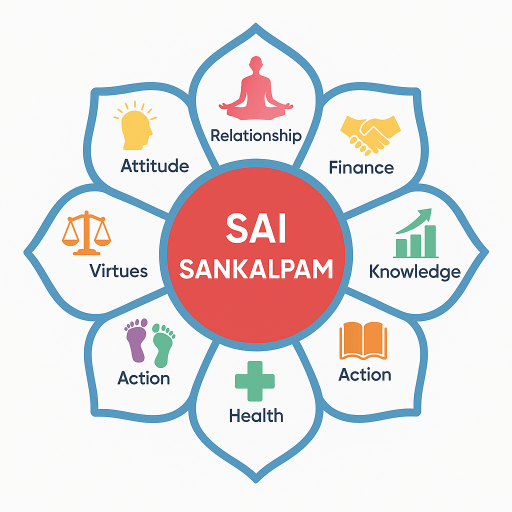
As a parent and physician, I have always believed in holistic development, one that addresses my children’s physical, emotional, and spiritual needs. Through my journey, I’ve found an enriching harmony between my professional experiences and spiritual insights, particularly through the teachings of Sai Baba. This harmonious fusion has guided me to a parenting approach centered on building foundational values across what I call the Four Pillars: Health, Relationships, Finance values, and Knowledge. Central to this approach is the T.E.A.R. Formula — which stands for Teaching, Example, Actions, and Reflection.
Building Health through Example and Action
Health is pivotal in the holistic development of a child. As a doctor, I have witnessed firsthand the profound impact of a nurturing environment on health. Yet, guidance often extends beyond mere professional advice. In my home, physical health is celebrated through routine activities like morning yoga sessions and preparing nutritious meals together. These practices have bonded us as a family while reinforcing the importance of looking after one’s body as a divine instrument.
Moreover, we prioritize emotional health by creating safe spaces for feelings and discussions. One of my patients once shared her struggle with her teenager’s tantrums. Inspired by Sai teachings of patience and understanding, I encouraged her to practice active listening and empathetic communication. This approach often transforms chaos into nurturing growth experiences.
Cultivating Relationships with Teaching and Example
As imparted by Sai philosophies, love and compassion form the bedrock of harmonious relationships. Parenting offers a unique platform to teach and model these virtues. I vividly remember a time when one of my children faced bullying at school. Drawing from Sai’s teachings, I instilled values such as forgiveness and empathy, helping them understand their peers’ diverse perspectives, turning potential resentment into a learning and growing experience.
At home, discipline is meted out with love, as opposed to fear or punitive measures. Just like tending a delicate plant, nurturing children with love and guidance shapes their virtues. For example, when my younger son refused to complete his homework, instead of reprimanding him, I encouraged him to share his thoughts and feelings, nurturing a sense of trust and understanding.
Finance Values through Actions
Financial wisdom, too, is crucial for holistic well-being. Guided by Sai’s teachings on wealth as a tool, not an end, I focus on instilling an understanding of financial responsibility in my children. Simple practices like managing small savings or making informed choices while shopping endow them with insights into budgeting and the value of money.
Service to others plays a vital role here. We engage in various community service activities, emphasizing selflessness and charity. These actions clarify that wealth is a means to uplift others and transform society. For instance, when devising care packages for those in need, my children learned to prioritize others’ needs over their desires, reinforcing Sai’s principle of “Help Ever, Hurt Never.”
Enriching Knowledge with Teaching and Reflection
Knowledge extends beyond academic prowess. Like Sai, who advocated for character development, I encourage my children to reflect on their learnings and actions. At home, we practice gratitude journaling, which has become a tool for self-reflection. Every evening before bedtime, we share one grateful moment from our day. This encourages self-awareness and transforms our outlook toward life’s challenges.
Through the T.E.A.R. approach, education becomes more about inner wisdom and self-exploration than merely acquiring facts. For instance, during a family reading session, we discuss moral stories that impart life lessons. These reflective practices instill a love for lifelong learning, emphasizing Sai Baba’s belief that “The end of education is character.”
Conclusion
Parenting is an ever-evolving journey, rich with opportunities to sculpt compassionate, wise, and well-rounded children. Just as Sai beautifully articulated, “The end of education is character.” By nurturing the Four Pillars through the T.E.A.R. Formula, parents can lay the groundwork for children who are not only successful but also genuinely happy and fulfilled contributors to society. It is our responsibility as parents to embody and impart these values, creating ripples of kindness, wisdom, and service that extend far beyond our immediate families.
Embracing Sai-centric parenting ensures that every stage of a child’s life is an opportunity to foster health, cultivate relationships, manage resources wisely, and imbibe knowledge with reflective insights. May this approach guide other parents in their efforts to nurture holistic, value-centric lives for their children.
For more insights and guidance rooted in holistic parenting, connect with us through our community Sai Parenting Network.
🙏 Support SaiSankalpam
If this content has helped or inspired you, you may offer a voluntary contribution.
⚠️ Disclaimer:
This is a voluntary contribution. No goods or services are sold.
Payments are processed securely by your UPI app.
SaiSankalpam does not store or access your payment information.